
Barrier supporting, microbiology friendly cleansing
Why The Olive Cleansing Oil respects skin at its most vulnerable step
Cleansing is the most underestimated step in skincare — and often the most damaging.
Many traditional cleansers rely on aggressive surfactants to create foam and a squeaky clean feeling. While this may feel effective in the moment, it often compromises the skin barrier and disrupts the skin’s natural microbiology.
The Olive Cleansing Oil by Olivella was formulated to cleanse differently. It is intentionally barrier supporting and microbiology friendly, designed to remove impurities while preserving the skin’s natural balance.
Why cleansing can make or break skin health
The skin barrier is responsible for maintaining hydration and defending against external stressors. When cleansing strips away the skin’s natural lipids, the barrier weakens — leading to dryness, sensitivity, and long-term imbalance.
At the same time, the skin hosts a complex microbiome of beneficial microorganisms that help regulate inflammation and support resilience. Over-cleansing or harsh formulas can interfere with this ecosystem.
A modern cleanser should do two things at once:
- Clean thoroughly
- Respect the skin as a living system
The “like dissolves like” approach
The Olive Cleansing Oil uses a time-tested principle: like dissolves like.
Because makeup, sunscreen, excess sebum, and environmental impurities are oil-based, an oil cleanser can dissolve them effectively without friction or harsh surfactants.
This allows The Olive Cleansing Oil to:
- Melt away makeup and sunscreen
- Lift impurities gently from the skin
- Cleanse without disrupting the lipid barrier
No aggressive foaming. No tight or stripped feeling after rinsing.
A truly barrier supporting cleanser
What makes The Olive Cleansing Oil barrier supporting is not only what it contains, but what it avoids.
It cleanses without:
- Removing essential skin lipids
- Compromising the skin’s protective film
- Forcing the skin into recovery mode
Instead, skin feels soft, comfortable, and balanced immediately after cleansing — an essential foundation for the rest of a skincare routine.
When the barrier is supported, the skin retains hydration more effectively and responds better to follow-up products.
Microbiology friendly by nature
Healthy skin is not sterile — it is alive.
The Olive Cleansing Oil is microbiology friendly because it respects the skin’s natural environment rather than attempting to “sanitize” it.
Its gentle cleansing action:
- Preserves the skin’s natural equilibrium
- Avoids unnecessary disruption of beneficial microorganisms
- Supports long-term skin comfort and resilience
This makes it particularly suitable for sensitive, reactive, or easily dehydrated skin.
Gentle enough for daily use, effective enough to trust
Gentle cleansing does not mean ineffective cleansing.
By supporting the skin barrier and respecting skin microbiology, The Olive Cleansing Oil allows the skin to:
- Cleanse thoroughly without stress
- Maintain balance over time
- Feel calm, nourished, and ready for treatment products
It’s an ideal first step for anyone looking to simplify their routine while improving overall skin health.
Cleansing that works with your skin
Barrier supporting, microbiology friendly skincare reflects a smarter philosophy — one that prioritizes long-term skin function over short-term results.
The Olive Cleansing Oil embodies this approach, offering a cleansing experience that respects the skin at its most vulnerable moment.
Clean skin should never feel stripped.
It should feel supported.
How to use
For best results and to keep the skin barrier and microbiome happy:
- Dispense 2–3 pumps of the oil into dry hands and gently massage onto dry face using circular motions.
- Add a bit of warm water to transform the oil into a milky texture, then rinse well.
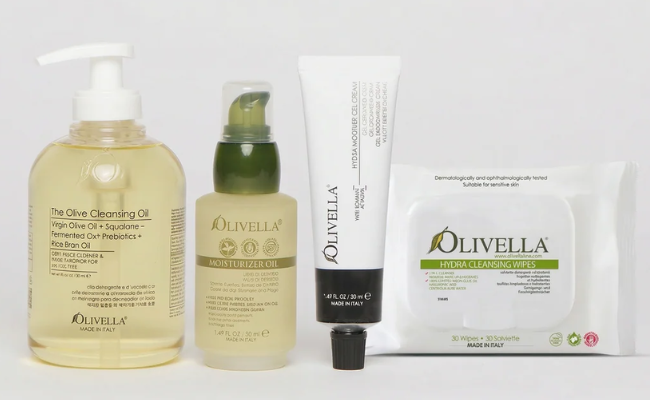
- Finish with your preferred Olivella moisturizer to keep skin fully hydrated and nourished.
Details pulled from the product page usage instructions.
Key ingredients and credentials
The Olive Cleansing Oil highlights ingredients that support barrier comfort and microbiome balance:
- Squalane from olives — locks in hydration, enhances elasticity, and strengthens the skin barrier.
- Fermented oat prebiotics — feed beneficial skin bacteria to reduce dryness, irritation, and redness for a balanced microbiome.
- Rice bran oil — rich in vitamins B and E, brightens, softens, and helps protect against environmental damage.
- Ultra-purified olive oil — packed with polyphenols and essential fatty acids for deep nourishment and silky radiance.
Made in Italy, vegan, cruelty-free, and dermatologist-tested, suited for all skin types including sensitive skin.
Why microbiome-friendly matters
The product description emphasizes harmony with the skin microbiome and nourishment while cleansing, rather than harsh purification. This aligns directly with the barrier supporting, microbiology friendly mindset highlighted in this article.
It also calls out a microbiome-friendly formula in its benefits, underscoring the long-term comfort and glow target.
Use The Olive Cleansing Oil as your first step, and let your skin stay supported, calm, and balanced — every single day.